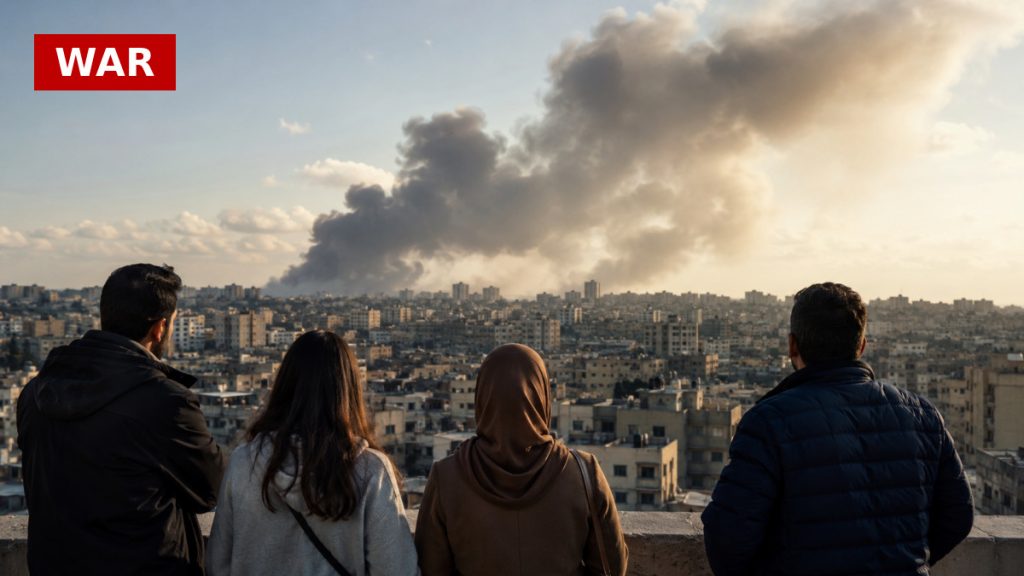
The recent collapse of the ceasefire between the US and Iran raises significant concerns about the potential for a protracted conflict. As military actions intensify, with airstrikes and drone attacks becoming commonplace, the situation is evolving into what some analysts describe as a ‘forever war.’ This term refers to conflicts that drag on indefinitely without a clear resolution, reminiscent of the US engagements in Iraq and Afghanistan.
The implications of this escalation are profound, particularly for global oil markets. The Strait of Hormuz, a critical shipping route for oil and gas, remains under threat from Iranian military capabilities. Even a minimal capacity for disruption can have significant effects on global energy prices, impacting household finances and economic stability in the UK and beyond.
Moreover, the shifting objectives of US military strategy highlight the challenges of achieving lasting peace. Initial goals of regime change have morphed into attempts to secure shipping routes, illustrating a reactive rather than proactive approach. This could lead to a cycle of retaliation that perpetuates instability in the region.
As the US continues its air campaign, the potential for a broader conflict looms. The lessons from past military interventions suggest that overwhelming force does not guarantee success, and the risk of a drawn-out engagement with Iran could have far-reaching consequences for international relations and security dynamics in the Middle East.
Source: DW News