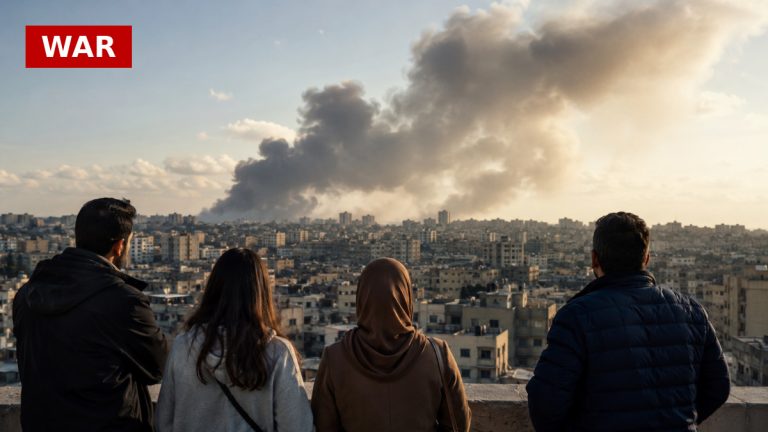
U.S. President Donald Trump has announced that new talks aimed at de-escalating the ongoing conflict in Iran will commence soon. This decision comes after he opted against launching significant military strikes, a move influenced by Gulf allies like Qatar and Saudi Arabia. The implications of these talks could be far-reaching, particularly for global oil markets, as the Strait of Hormuz is a critical passage for oil and gas shipments.
The Iranian government, however, has stated that it is not currently engaged in negotiations with the U.S., indicating a complex diplomatic landscape. This disconnect raises questions about the effectiveness of the talks and whether they can lead to any substantive agreements. The ongoing conflict has already disrupted trade routes and contributed to rising fuel prices, affecting economies worldwide.
In addition to the Iran situation, violence in Gaza continues, with recent Israeli airstrikes resulting in civilian casualties. This ongoing conflict further complicates the regional dynamics and highlights the humanitarian crisis faced by displaced Palestinians, exacerbated by extreme weather conditions.
As these developments unfold, the potential for shifts in diplomatic relations and economic impacts remains significant. The outcome of the upcoming talks could either pave the way for stability or lead to further escalation, affecting not just the Middle East but global markets and security as well.
Source: PBS News