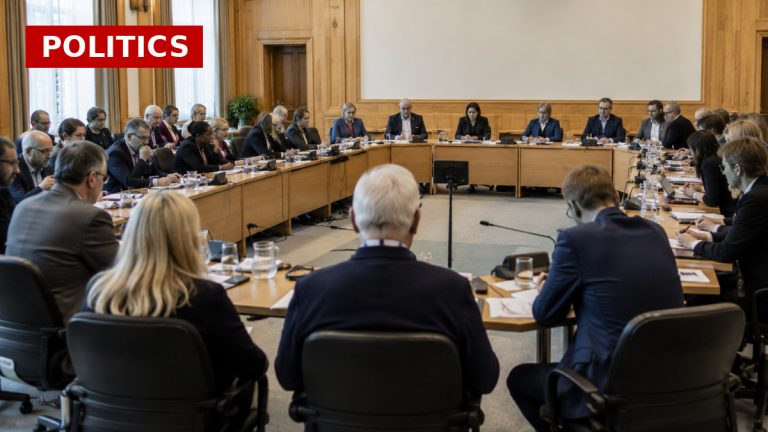
Hungary’s parliament has elected Andras Baka as the new president, marking a significant shift in the country’s political landscape. Baka, a former head of the Supreme Court and a critic of Viktor Orban, replaces Tamas Sulyok, whose term was cut short by a constitutional amendment. This move is part of Prime Minister Peter Magyar’s broader strategy to dismantle Orban’s legacy following his recent electoral victory.
The appointment of Baka, who has a history of advocating for democratic principles, indicates a potential pivot towards restoring the rule of law in Hungary. Magyar’s government, holding a two-thirds majority, has faced accusations of using authoritarian tactics reminiscent of Orban’s regime, particularly in the manner of Sulyok’s removal. Critics argue that such actions threaten the democratic fabric of the nation.
Baka’s election has sparked protests from Orban’s Fidesz party, which boycotted the vote, highlighting the deep divisions within Hungarian politics. Despite the contentious backdrop, Baka has called for unity and open dialogue, suggesting a desire to bridge the gap between opposing factions in a country still grappling with the aftermath of Orban’s tenure.
As Hungary navigates this transitional phase, the implications of Baka’s presidency could resonate beyond ceremonial duties, potentially influencing future governance and civil rights in the nation. Observers will be watching closely to see if this leadership change can indeed lead to a more democratic and inclusive Hungary.
Source: DW News