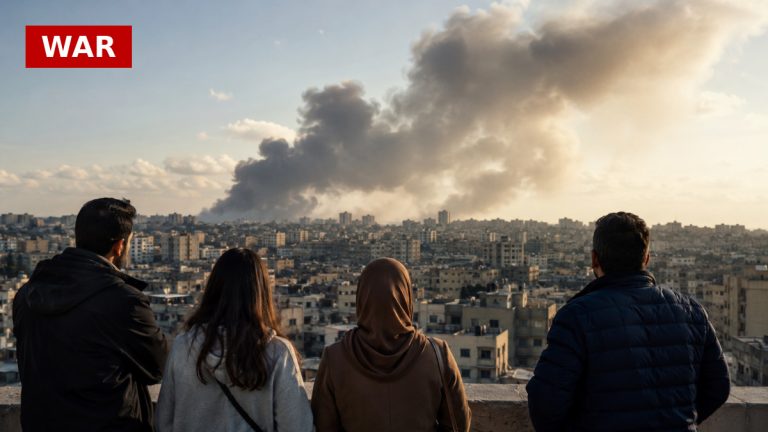
The recent killing of Colonel Jamal Abu Kamil, the police chief of Gaza City, in an Israeli drone strike marks a significant escalation in the ongoing conflict. This incident not only highlights the fragility of the ceasefire but also raises questions about the implications for local governance and security in Gaza. Abu Kamil’s death, described by Gaza’s Ministry of Interior as an assassination, underscores the risks faced by public officials amid military operations.
Israel claims the strike targeted a Hamas commander, yet the police force has denied any affiliation with militant activities. This discrepancy points to a broader narrative where the Israeli military justifies its actions under the guise of security, potentially undermining trust in local authorities. The ongoing violence, including airstrikes that resumed after a brief pause, has already resulted in significant casualties, with over 1,250 Palestinians reported killed since the ceasefire began.
The situation is compounded by the recent rejection of a peace plan proposed by the US, which aimed to facilitate a withdrawal of Israeli forces in exchange for Hamas disarmament. Prime Minister Netanyahu’s refusal to engage with this plan suggests a hardening stance that could lead to further military actions and instability in the region.
As tensions rise, the implications for everyday life in Gaza become increasingly dire. The assassination of a key police figure may lead to a power vacuum, exacerbating lawlessness and chaos, while also impacting humanitarian efforts in a region already grappling with severe challenges. The international community’s response will be crucial in determining the next steps in this volatile situation.
Source: Al Jazeera