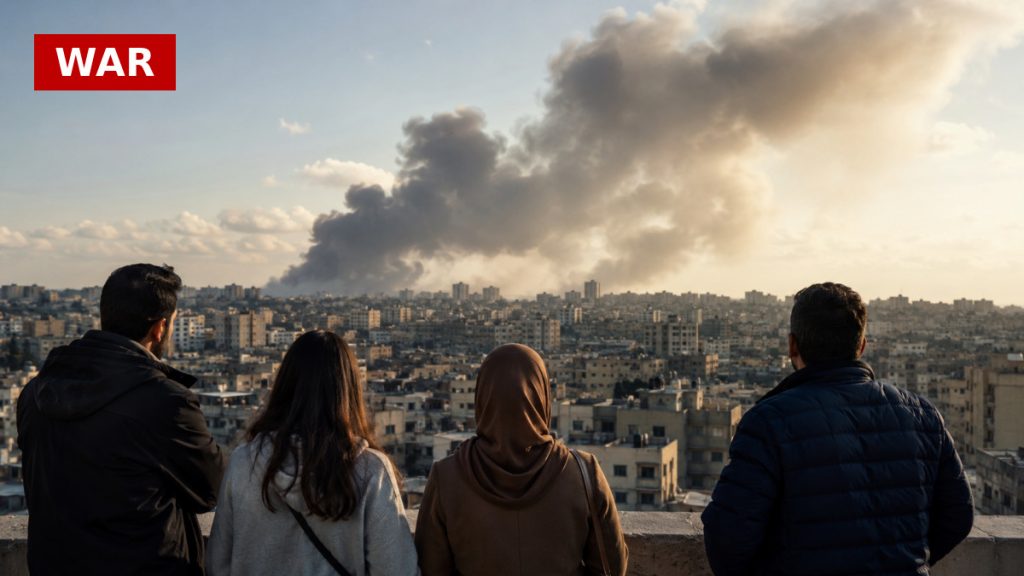
An Israeli air strike in southern Lebanon has resulted in the deaths of seven individuals, marking the deadliest attack since a ceasefire agreement in June. This incident, which occurred in the Nabatieh district, has raised concerns about the stability of the region, as it follows a period of reduced hostilities between Israel and Hezbollah.
The air strikes targeted multiple locations, including a house in Ansar, and have led to significant destruction and casualties. Emergency services are currently engaged in rescue operations, highlighting the immediate humanitarian impact of this escalation. The strikes are seen as a direct challenge to the recent agreements aimed at reducing violence, which included provisions for the disarmament of Hezbollah and the withdrawal of Israeli forces.
Despite the framework established in June, which was intended to foster peace, Israeli military actions have continued. This raises questions about the effectiveness of diplomatic efforts and the potential for further conflict. Hezbollah’s leadership has criticized the Lebanese government for its handling of the situation, suggesting that the ongoing violence undermines the authority of the Lebanese army.
As tensions rise, the implications for regional security are profound. The situation not only affects Lebanon but also has potential repercussions for broader Middle Eastern stability, as international actors may become more involved in seeking a resolution to the renewed violence.
Source: Al Jazeera