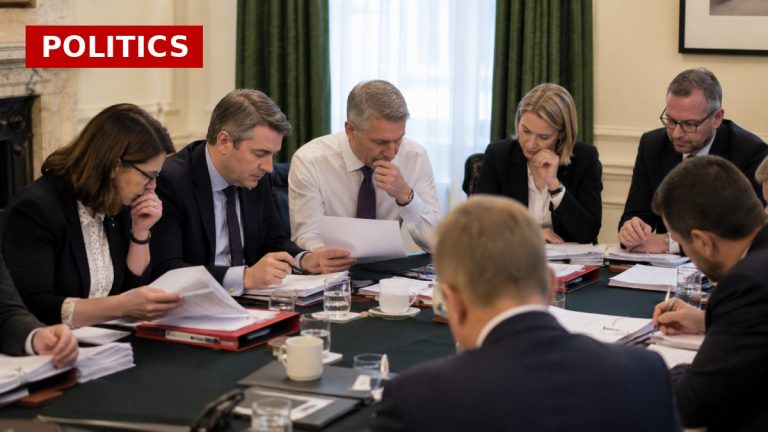
The UK government’s recent decision to ban imports from Israeli settlements in the occupied West Bank marks a significant shift in its Middle East policy. This move, announced by Foreign Secretary Ed Miliband alongside Prime Minister Andy Burnham, is seen as an attempt to assert a more proactive stance in international diplomacy, particularly in relation to the Palestinian statehood issue. It reflects Burnham’s ambition to differentiate his leadership from that of his predecessor, Sir Keir Starmer, and to respond to growing calls within the Labour Party for a stronger stance on Israel’s actions.
This policy change is not just about international relations; it also has domestic ramifications. The Labour Party has faced criticism for its past handling of issues affecting British Jews, and Burnham’s approach aims to rebuild trust within this community. However, the announcement has sparked concerns among Jewish leaders, with some warning that it could exacerbate antisemitism in the UK. Balancing these sensitivities while advocating for a two-state solution will be a critical challenge for Burnham as he navigates his new role.
The coordinated action with other nations, including France and Canada, is intended to mitigate potential backlash from Israel and the United States. UK officials had anticipated that Israel might respond by closing the British consulate in Jerusalem, which has now occurred. This reaction underscores the delicate nature of international relations in the region and the potential for diplomatic fallout.
As Burnham prepares for upcoming international meetings, he must address the anxieties of British Jews while promoting a policy that many in his party support. The implications of this shift could redefine Labour’s relationship with both the Jewish community and its left-wing base, making it a pivotal moment in UK politics.
Source: BBC News