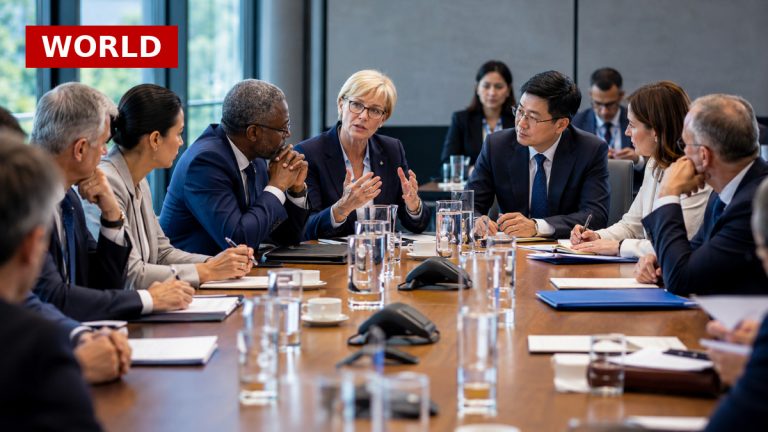
The European Union has officially launched the accession process for Ukraine and Moldova, a significant step that could reshape regional security dynamics. This move follows Hungary’s recent lifting of its veto, which had stalled negotiations previously. Both nations view EU membership as a crucial buffer against Russian aggression, highlighting the geopolitical stakes involved.
The opening of talks is not merely procedural; it signals a broader commitment from the EU to expand its influence in Eastern Europe. This enlargement is seen as a strategic choice in a world fraught with uncertainty, aiming to bolster collective security and stability.
However, the path to membership is complex and lengthy, typically taking years to navigate. The initial discussions will focus on fundamental principles like the rule of law, which are essential for integration into the EU framework. Hungary’s new government has indicated that while it supports the process, it will not endorse a fast-track approach for Ukraine.
As these negotiations unfold, the implications for both countries and the EU will be profound. The outcome could redefine relationships in the region, impacting everything from trade to security policies, and potentially altering the balance of power in Eastern Europe.
Source: Al Jazeera