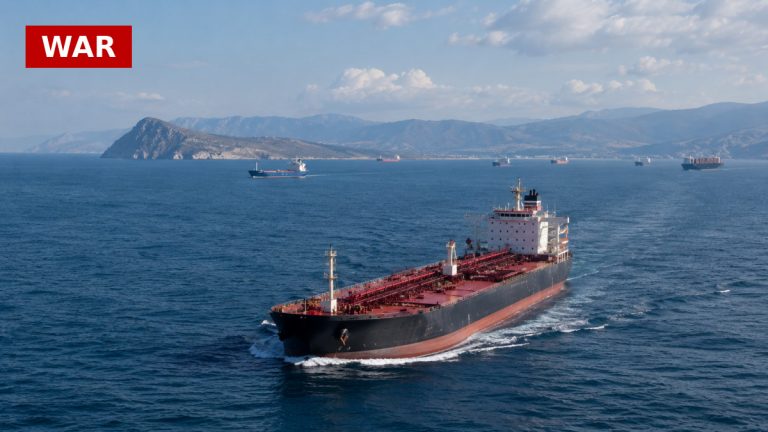
Iran’s recent military actions against US bases in Bahrain, Kuwait, and Jordan mark a significant escalation in regional tensions. The Islamic Revolutionary Guard Corps has claimed responsibility for drone strikes and missile attacks, framing these as retaliation for US airstrikes on Iranian territory. This cycle of violence not only threatens the stability of the Gulf region but also raises concerns over global oil supply, given that the Strait of Hormuz is a critical maritime route for oil tankers.
The closure of the Strait of Hormuz, as announced by Iran, could have immediate and far-reaching economic consequences. With approximately 20% of the world’s oil passing through this strait, any disruption could lead to soaring oil prices and increased costs for consumers worldwide. This situation is compounded by the ongoing indirect negotiations between the US and Iran regarding a potential peace deal, which are now at risk of collapsing under the weight of military aggression.
Moreover, the recent attacks highlight the vulnerabilities of US military assets in the region and the potential for further retaliatory strikes. As both nations engage in a tit-for-tat strategy, the risk of miscalculation increases, which could lead to a broader conflict involving other regional players, including Israel and Hezbollah.
In the context of these developments, the international community is urged to pay close attention to the evolving situation. The interplay of military actions and diplomatic efforts will be crucial in determining whether a path to de-escalation can be found, or if the region will descend into further chaos, impacting global security and economic stability.
Source: Al Jazeera