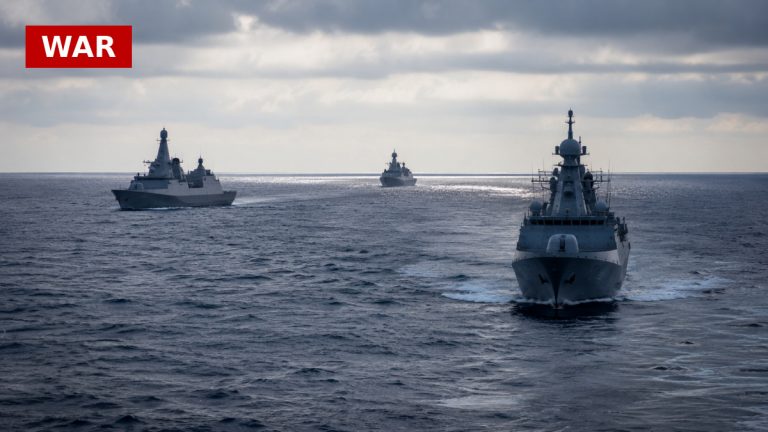
A recent incident involving a Russian warship firing flares at a Danish military helicopter has raised significant concerns about escalating tensions in Europe. The Danish government has summoned the Russian ambassador, highlighting the seriousness of the situation. Prime Minister Mette Frederiksen described the attack as reckless, indicating that such actions are intended to intimidate NATO allies and undermine regional stability.
This incident is not isolated; it reflects a broader pattern of aggressive behaviour from Russia, which appears to be testing the limits of acceptable military conduct in international waters. Foreign Minister Lars Lokke Rasmussen noted that this shift in behaviour is something Denmark cannot tolerate, suggesting a potential for increased military readiness among NATO members in response.
The implications extend beyond diplomatic protests. As NATO scrambles to respond to incursions and threats, member states may need to reassess their defence strategies and readiness levels. This could lead to increased military presence in the Baltic region, affecting local economies and security policies.
Moreover, the incident coincides with heightened military activity in the region, including NATO’s recent engagement with unidentified aerial threats. As tensions rise, the potential for miscommunication or miscalculation increases, posing risks not only to military personnel but also to civilian populations in the vicinity of these operations.
Source: GB News