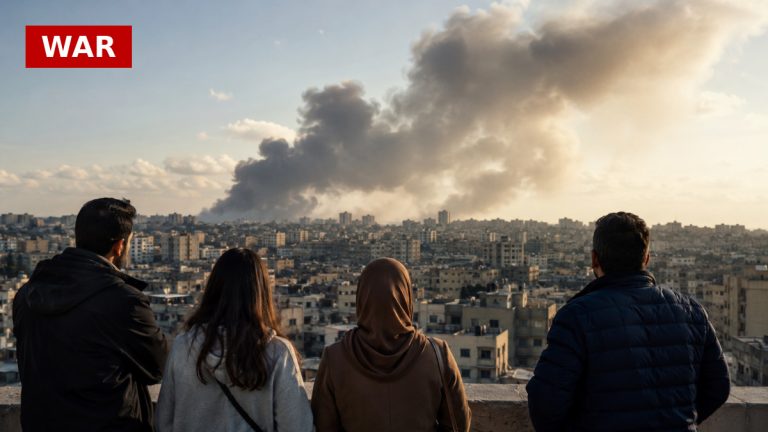
The recent announcement by Hamas to dissolve its civilian administration in Gaza has raised questions about the practical implications for residents. Despite this shift, many Gazans report that daily operations remain unchanged, with Hamas still controlling essential services. Eyad Saleh, a student, highlights the lack of alternatives, stating that government offices continue to function as they did before the war, leaving residents reliant on the same institutions.
Healthcare access remains a pressing issue, as chronic patients like Na’ama Saeed find themselves dependent on the Hamas-run Health Ministry for medical referrals. This reliance underscores the challenges faced by Gazans in navigating a system that has not fundamentally altered, despite international efforts for reform. The anticipated transition to a technocratic administration, as outlined in a US peace plan, is stalled, with key figures unable to enter Gaza due to Israeli restrictions.
The ongoing conflict has exacerbated the humanitarian crisis, with over 1,000 Palestinians reportedly killed since the ceasefire began. The situation is further complicated by Hamas’s refusal to disarm, which they link to Israel’s military actions. This deadlock leaves Gazans in a precarious position, caught between the ambitions of political factions and the harsh realities of life under occupation.
As public disillusionment grows, with many losing faith in both Hamas and the Palestinian Authority, the future remains uncertain. Aid organizations continue to face obstacles in delivering assistance, highlighting the dire need for a political solution that addresses the needs of the population. Without significant changes, daily life for Gazans is likely to remain fraught with challenges and limited options.
Source: DW News