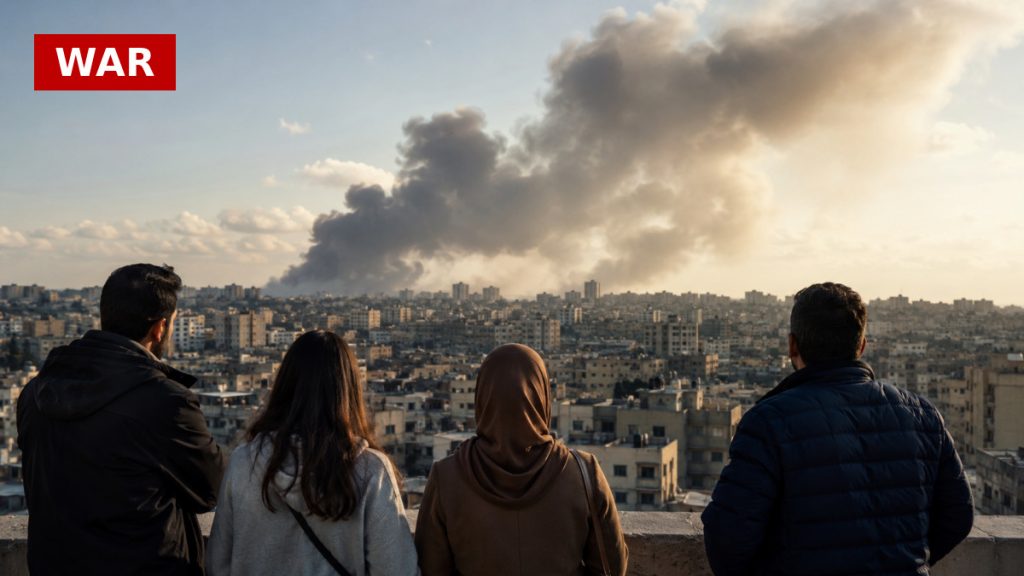
In Gaza, high school graduation exams have taken on a new, harrowing significance. With schools destroyed and many students displaced, candidates like Dana Shabat are forced to adapt to extreme conditions. Dana, who lost her mother in an airstrike, now lives in a tent and must walk an hour to access a café with reliable internet for her exams. This situation highlights not only the immediate challenges faced by students but also the long-term implications for their education and future opportunities.
The tawjihi exams, crucial for university admission, are being conducted online for the first time since the ongoing conflict began. Unlike their counterparts in the West Bank, students in Gaza lack the basic infrastructure to take these exams in schools, leading to increased stress and anxiety. Dana’s experience underscores the resilience required to navigate education during wartime, as she balances her studies with family responsibilities in a makeshift living situation.
Parents like Dana’s father, Muhanna, have made significant sacrifices to support their children’s education amidst dire circumstances. The emotional toll of their losses and the struggle for normalcy manifest in the daily routines of these students. Each exam represents not just an academic hurdle but a testament to their perseverance against overwhelming odds.
As the conflict continues, the educational landscape in Gaza remains precarious. The impact on students’ futures could be profound, with many like Dana striving for scholarships to escape the hardships of their current reality. Their determination to succeed amidst adversity serves as a poignant reminder of the human cost of war and the enduring hope for a better future.
Source: Al Jazeera