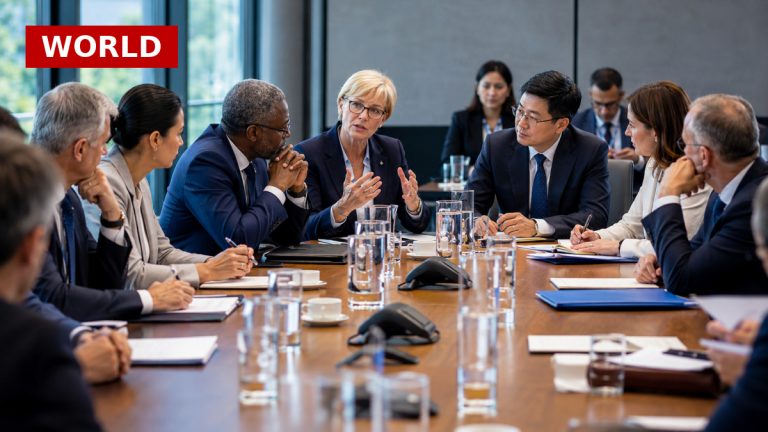
The recent summit in Kyrgyzstan, featuring leaders from China, Russia, and India, marks a significant moment in global geopolitics. This gathering, part of the Shanghai Cooperation Organization (SCO), aims to present a united front against U.S. influence, highlighting a shift towards a multipolar world. The implications of this summit extend beyond mere diplomacy; it signals a potential realignment of international power dynamics that could affect trade, security, and alliances.
As these nations strengthen their ties, the summit serves as a platform for countries like India to navigate complex relationships with rivals such as Pakistan and China. While the SCO is not a cohesive military bloc, its growing influence could reshape regional security strategies and economic partnerships. For India, participation in the SCO allows it to assert its interests in a region increasingly dominated by larger powers, providing a counterbalance to Western alliances.
Moreover, the summit’s outcomes may influence global economic flows and investment patterns, particularly as China and Russia promote alternative development models. This could lead to a shift in how countries engage with international financial institutions, potentially undermining Western economic hegemony.
The summit also reflects broader societal changes, as nations seek to redefine their roles on the global stage. With the backdrop of ongoing conflicts and economic challenges, the SCO’s efforts to foster cooperation among non-Western nations could have lasting impacts on international relations and domestic policies in member states.
Source: PBS News