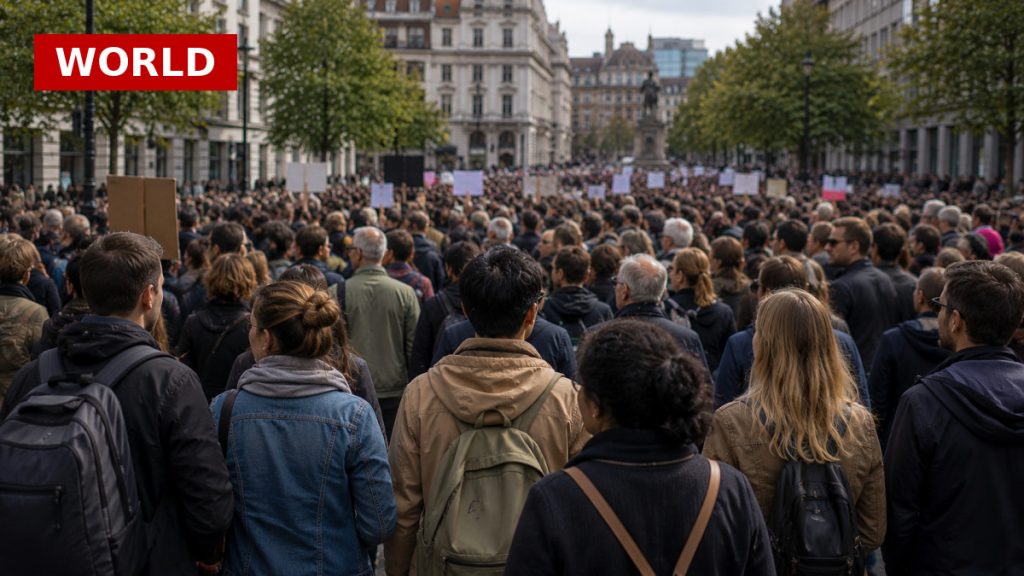
The ongoing protests by ultra-Orthodox Jews against military conscription are reshaping Israel’s political landscape. As tensions rise, the protests highlight a significant divide within Israeli society, where the ultra-Orthodox community’s refusal to serve in the military is seen as a challenge to national unity. This issue has escalated to the point where Prime Minister Netanyahu’s coalition is threatened, prompting discussions about potential parliamentary dissolution.
The ultra-Orthodox view military service as a dilution of their religious practices, framing their protests as a defense of their faith. This perspective complicates the situation, as many Israelis support conscription for this demographic, viewing it as essential for national cohesion. The protests have led to violence, with clashes between demonstrators and police becoming increasingly common, raising concerns about public safety and governance.
The political implications are profound, as the ultra-Orthodox parties hold significant sway in the Knesset. Their push for draft exemptions could alienate broader public support, especially as Israel’s society grows more militaristic amid ongoing conflicts. Analysts suggest that the ultra-Orthodox community’s demographic growth could further complicate future governance, potentially leading to a more polarized society.
As the situation unfolds, the potential for long-term societal change looms large. The ultra-Orthodox community, currently 12% of the Jewish population, is growing rapidly, which could shift the balance of power in Israeli politics. The outcome of this struggle over military service may redefine Israel’s identity and its approach to governance in the years to come.
Source: Al Jazeera