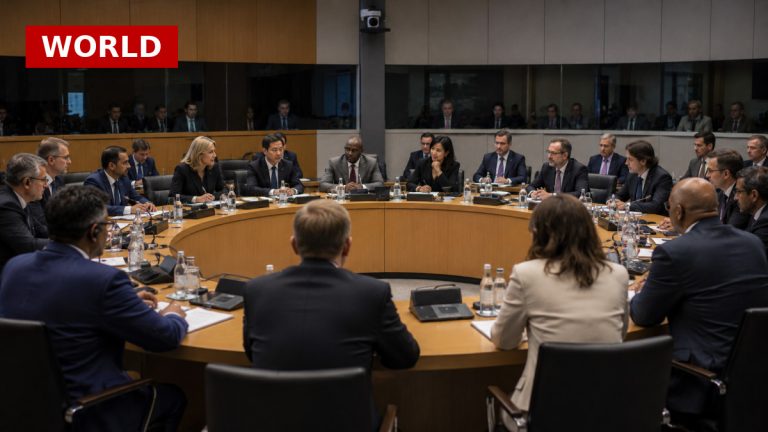
The recent passage of a significant Ukraine aid bill by the US House of Representatives highlights a shifting political landscape regarding foreign policy. This legislation, which authorizes over $1 billion in assistance and sanctions against Russia, marks a rare moment of bipartisan agreement, with 18 Republicans joining Democrats to support Ukraine amidst ongoing military conflict.
This development signals a growing unease among some Republicans about the current administration’s approach to Russia, suggesting a potential shift in US foreign policy priorities. The bill’s passage could influence future military and economic support for Ukraine, reinforcing the notion that Congress is willing to assert its role in shaping international relations.
Moreover, the legislation’s implications extend beyond Ukraine, as it underscores a broader commitment to countering authoritarianism globally. The support for Ukraine is framed not just as a regional issue but as a crucial stance against aggression that could resonate in other geopolitical contexts.
As the bill moves to the Senate, its fate remains uncertain, but the House’s action reflects a significant moment in US politics, potentially altering the dynamics of international support for Ukraine and impacting future legislative efforts on foreign policy.
Source: Radio Free Europe/Radio Liberty