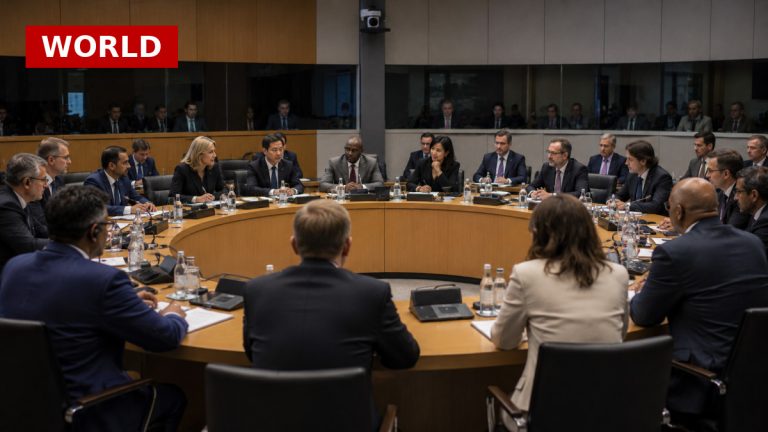
The Trump administration’s recent vow to ‘disable’ the International Criminal Court (ICC) signals a significant shift in international legal dynamics. By threatening sanctions against nations cooperating with the ICC, the US is not only asserting its sovereignty but also challenging the court’s authority, which could have far-reaching implications for global justice.
This move may embolden other nations to disregard international legal norms, potentially leading to a fragmented approach to human rights accountability. As the US seeks to rally allies against the ICC, it raises questions about the future of international law and the protection of human rights, particularly in conflict zones where accountability is crucial.
Moreover, the administration’s rhetoric suggests a belief that powerful nations can operate above the law, undermining the principles established after World War II. This could lead to a decline in international cooperation on legal matters, as countries may hesitate to engage with institutions perceived as being under threat.
As the ICC grapples with internal challenges, the US’s aggressive stance could weaken its position further, impacting its ability to investigate war crimes and hold perpetrators accountable. The implications of this campaign extend beyond the ICC, potentially reshaping the landscape of international relations and legal frameworks worldwide.
Source: Al Jazeera