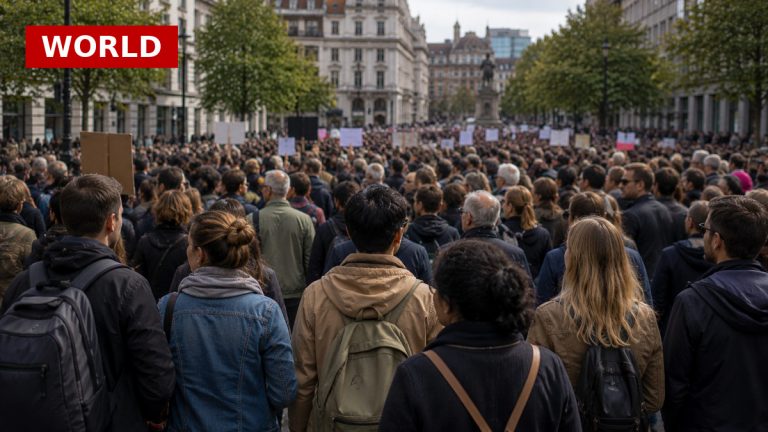
The ‘Cockroach Janta Party’ (CJP), a youth-led protest movement in India, is rapidly expanding beyond its origins in New Delhi. Initially sparked by a derogatory remark from a Supreme Court judge, the movement has harnessed widespread discontent over corruption and youth unemployment, rallying tens of thousands of young demonstrators. As protests gain traction in various states, the movement is putting significant pressure on Prime Minister Modi’s government.
Recent events, including a hunger strike by activist Sonam Wangchuk and police crackdowns on protests, have amplified the movement’s visibility. Images of police violence have circulated widely, prompting solidarity rallies across the nation. The CJP’s demands include accountability for educational corruption and the resignation of Education Minister Dharmendra Pradhan, reflecting a broader frustration with the education system and job market.
Support for the CJP is not confined to urban centres; it has reached rural areas, with activists and students organizing demonstrations in cities like Pune, Bengaluru, and Kolkata. This grassroots support indicates a growing recognition of the movement’s relevance to a wider audience, particularly among young people facing similar challenges across India.
While some government officials dismiss the movement’s potential for national impact, political analysts suggest that its simple, relatable demands could resonate with many, potentially transforming it into a significant political force. The CJP’s ability to mobilize without centralized leadership could be key to its expansion, as it taps into the frustrations of a generation seeking change.
Source: DW News