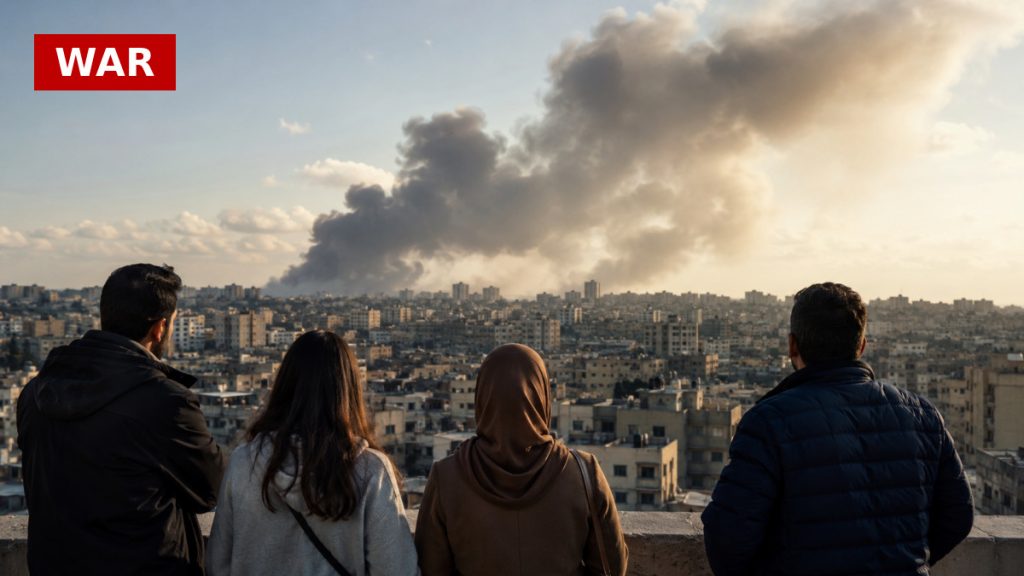
Recent clashes between Israeli forces and Hezbollah along the Litani River in southern Lebanon highlight a precarious situation as both sides prepare for upcoming peace talks. The Israeli military has intensified its strikes, targeting over 100 Hezbollah sites, which has raised fears among civilians in the region. This escalation comes just days before Lebanese and Israeli delegations are set to meet in Washington, complicating efforts for a lasting ceasefire.
The conflict’s impact is felt beyond the immediate area, as over a million people in Lebanon have been displaced since the start of hostilities. The ongoing violence threatens to derail diplomatic efforts aimed at stabilising the region, with Hezbollah vowing to continue its resistance until Israeli airstrikes cease. This situation poses a risk of broader regional instability, which could have implications for UK interests in the Middle East.
As the conflict escalates, the UK may face indirect consequences, including potential disruptions in energy supplies and increased refugee flows. The situation also raises concerns about the safety of British nationals in the region, as well as the UK’s diplomatic relations with both Israel and Lebanon. Understanding these dynamics is crucial for grasping the potential fallout from this conflict.
In the coming days, the outcome of the peace talks will be pivotal. Should they fail, the likelihood of further military action increases, which could exacerbate the humanitarian crisis in Lebanon and impact international security. Observers will be watching closely to see how this situation unfolds and what it means for the broader geopolitical landscape.
Source: PBS News