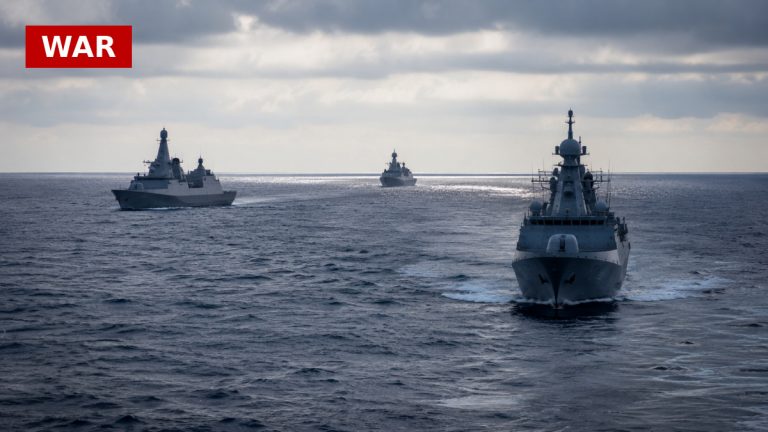
As the conflict between the US and Iran reaches its 100th day, tensions have surged following the US military’s downing of Iranian drones over the strategically crucial Strait of Hormuz. This waterway is vital for international maritime traffic, particularly for oil and gas shipments from the Gulf region. The US Central Command (CENTCOM) confirmed the action, which has drawn a sharp response from Tehran, escalating the already fraught situation.
In retaliation, Iran launched missile strikes targeting US allies in Bahrain and Kuwait, further straining relations and drawing condemnation from Gulf nations. This cycle of attacks highlights the fragility of a ceasefire agreed upon in early April, which has failed to hold amid ongoing hostilities. The situation is compounded by indirect negotiations that have not yielded a resolution, leaving the region in a precarious state.
The implications of this conflict extend beyond immediate military engagements. The Strait of Hormuz is a critical chokepoint for global energy supplies, and any disruption could have significant repercussions for oil prices and international markets. As the US and Iran continue their tit-for-tat exchanges, the risk of broader conflict looms, potentially impacting global economic stability.
Moreover, the situation in Lebanon, where Israeli strikes have resulted in casualties among Lebanese forces, adds another layer of complexity to the regional dynamics. As diplomatic efforts, such as those from Pakistan’s Interior Minister in Tehran, unfold, the path to peace remains uncertain, with the potential for further escalation always present.
Source: Al Jazeera