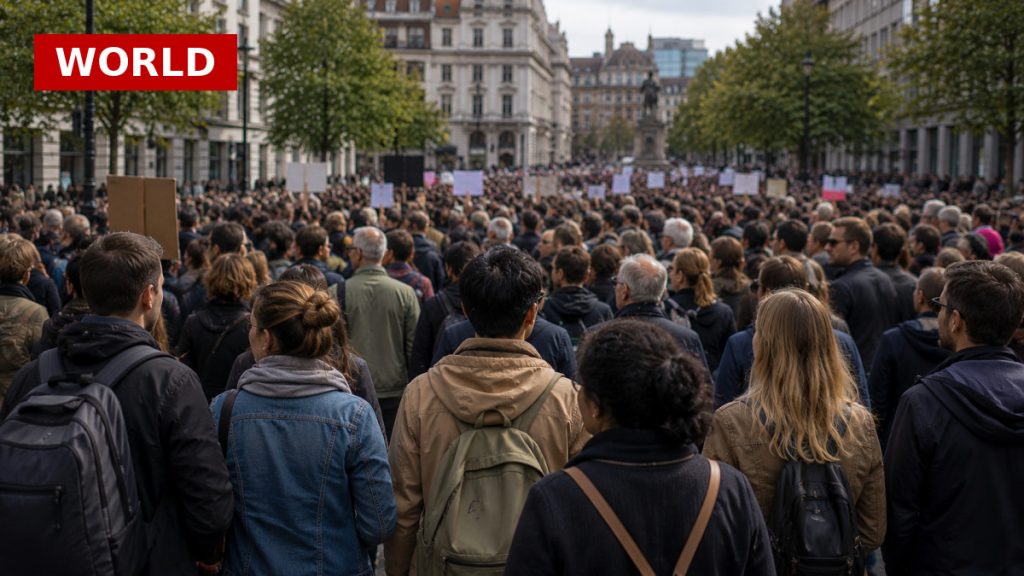
Protests have erupted across Scotland in response to a violent knife attack in Belfast, where a man has been charged with attempted murder. Demonstrators gathered in cities like Glasgow and Edinburgh, many wearing masks and waving Union flags. The protests have raised concerns about rising tensions and the potential for further unrest, particularly as they coincide with a charged political climate.
In Glasgow, police were heavily deployed to manage the crowds, diverting protesters away from the city centre and closing several streets and bridges. This heavy police presence highlights the authorities’ apprehension about the protests escalating into violence, as seen in Belfast where the attack led to significant disorder.
The protests have drawn attention to the underlying societal issues, including rising anti-immigrant sentiment and the presence of far-right groups. Activist groups have condemned the protests, labelling them as gatherings of ‘fascists and far-right thugs,’ which could further polarise communities and lead to increased tensions.
As these protests unfold, the implications for community relations and public safety are significant. The situation serves as a warning sign of the potential for violence and division, urging a closer examination of the factors contributing to such unrest in both Scotland and Northern Ireland.
Source: BBC News