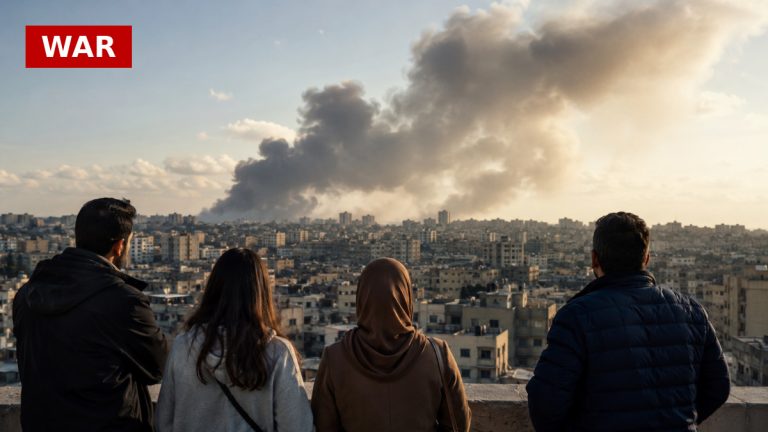
Donald Trump’s announcement of a deal for Hamas to disarm and for Israel to withdraw from Gaza has raised significant questions about its feasibility. While the US president’s Board of Peace heralds this as a critical step towards stabilising the region, both Israeli and Hamas officials have expressed skepticism about the agreement’s implementation. The crux of the dispute lies in the sequencing of disarmament and withdrawal, with Hamas insisting that Israel must first withdraw its forces before any disarmament occurs.
This disagreement highlights the complexities of the situation in Gaza, where a history of mistrust complicates negotiations. Israeli officials demand complete disarmament as a precondition for any withdrawal, a stance that Hamas has rejected. The ongoing military actions, including recent Israeli strikes that resulted in civilian casualties, further undermine the fragile peace process. The lack of a clear timeline for disarmament adds to the uncertainty, with estimates suggesting it could take up to a year.
The implications of this agreement extend beyond immediate military concerns. If successful, it could lead to the establishment of a new Palestinian government and a potential shift in governance in Gaza. However, the current reality shows a stark contrast to this hopeful vision, as violence continues and the humanitarian situation deteriorates.
As negotiations proceed, the involvement of international mediators from Egypt, Qatar, and Turkey will be crucial. The outcome will not only affect the lives of those in Gaza but also the broader geopolitical landscape in the Middle East, making it essential for all parties to find common ground amidst their differences.
Source: The Guardian